
The Cost of Creating Disciples
Count the Cost. Trust the Shepherd. Make Disciples.
SCRIPTURE & ARTWORK EXPOSITION
The Meaning Behind
The Imagery
An in-depth, reflective exploration of how individual verses from Matthew 10:16-39 shaped every brushstroke and symbol in the painting by representing the cost of following Jesus, the call to make disciples, and the faith required to obey.
Painted by Briauna Hayden
Commissioned by Heath and Sheri Tieben
Oil on wood panel · 30 × 40 inches · September 2025 – March 2026
The Foundation: Matthew 10:16-39
Matthew 10:16-39 is the central passage behind this painting. Jesus prepares His disciples for the realities of following Him. He speaks about being sent into a hostile world, facing persecution, experiencing betrayal, being misunderstood, and remaining faithful when obedience becomes costly.
He also reminds His disciples not to be afraid. Their lives are known to the Father, and their faithfulness must be grounded in their relationship with Him.
The passage does not present discipleship as an easy road. It presents a call to follow Jesus with a willingness to face what may come.
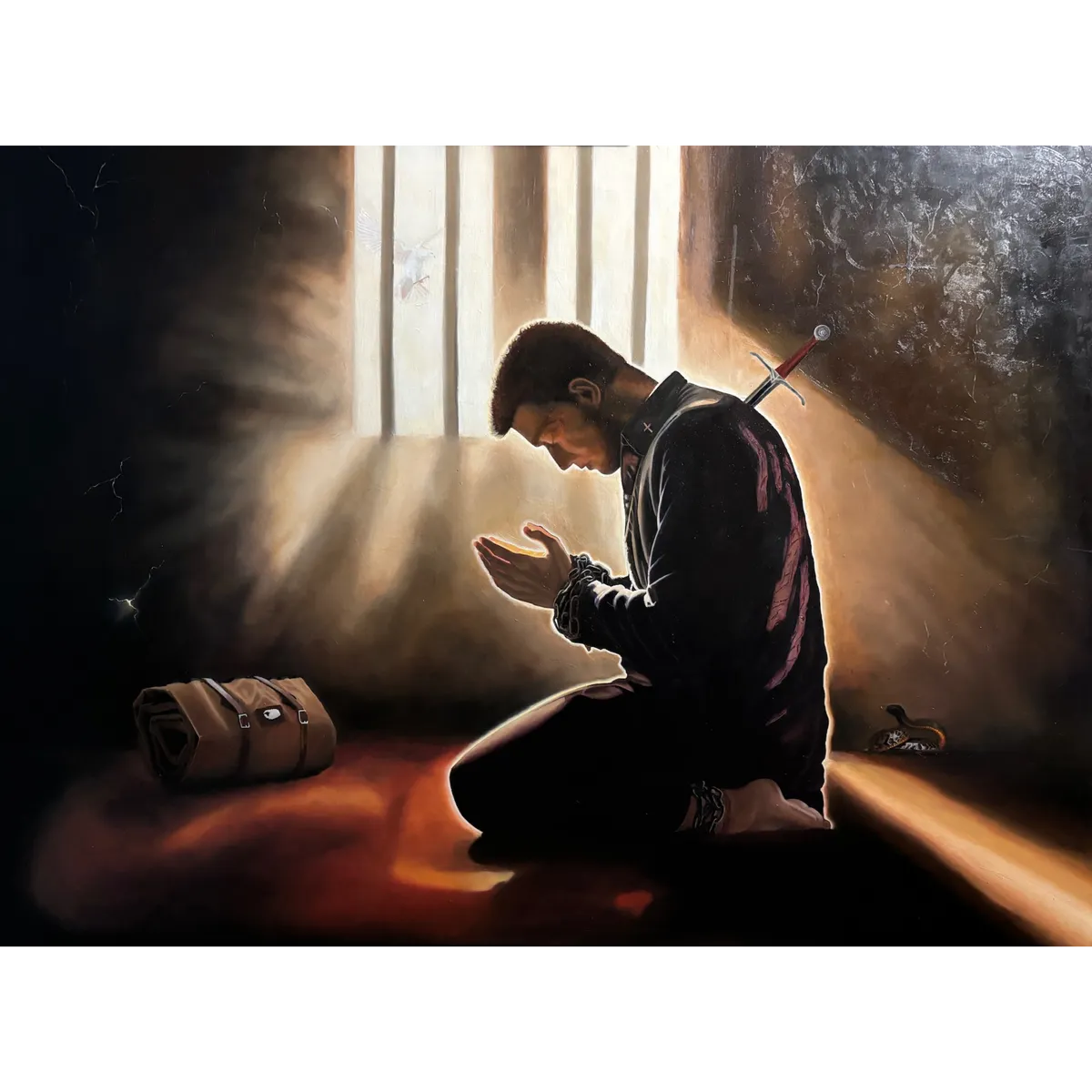
This is why the painting contains both suffering and peace, both darkness and light, both the threat of betrayal and the posture of surrender. The figure is not shown because the cost is insignificant. He is shown because the cost must be considered in light of the One he follows.
The details below explore how individual verses shaped the imagery.
The Sheep, Dove, Snake, and Wolves: Wise and Innocent
Matthew 10:16 begins with Jesus' words:
“I am sending you out like sheep among wolves. Therefore be as shrewd as snakes and as innocent as doves.”
Each of these creatures appears in the painting as a visual connection to that verse.
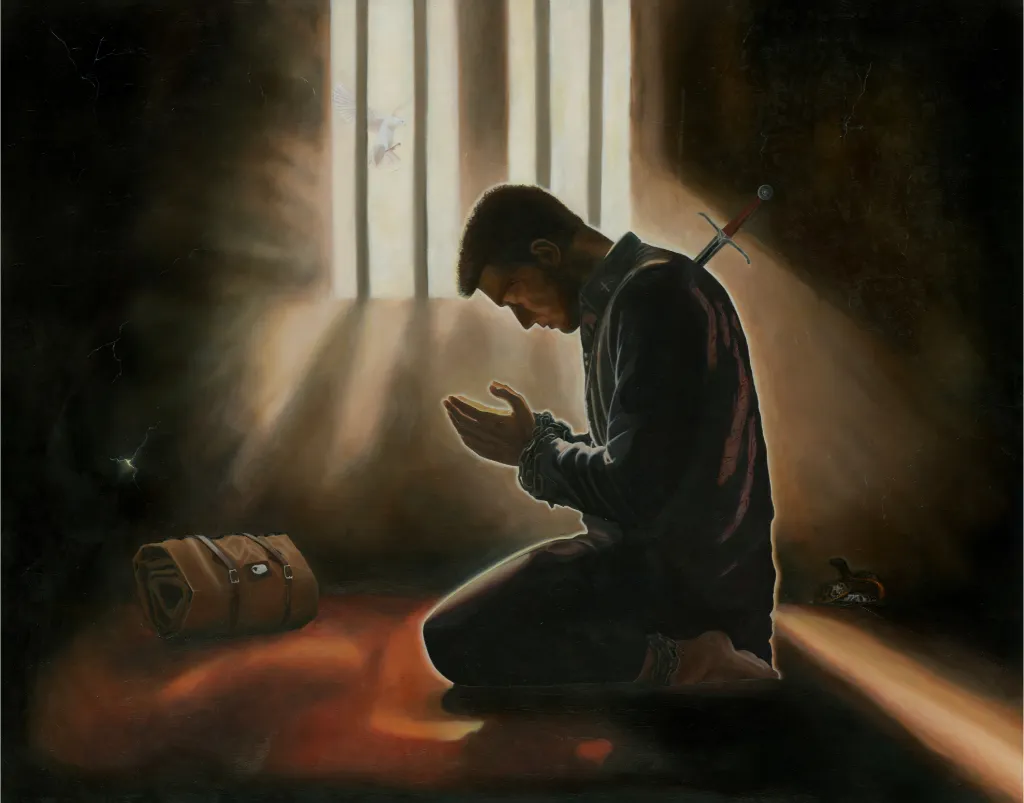
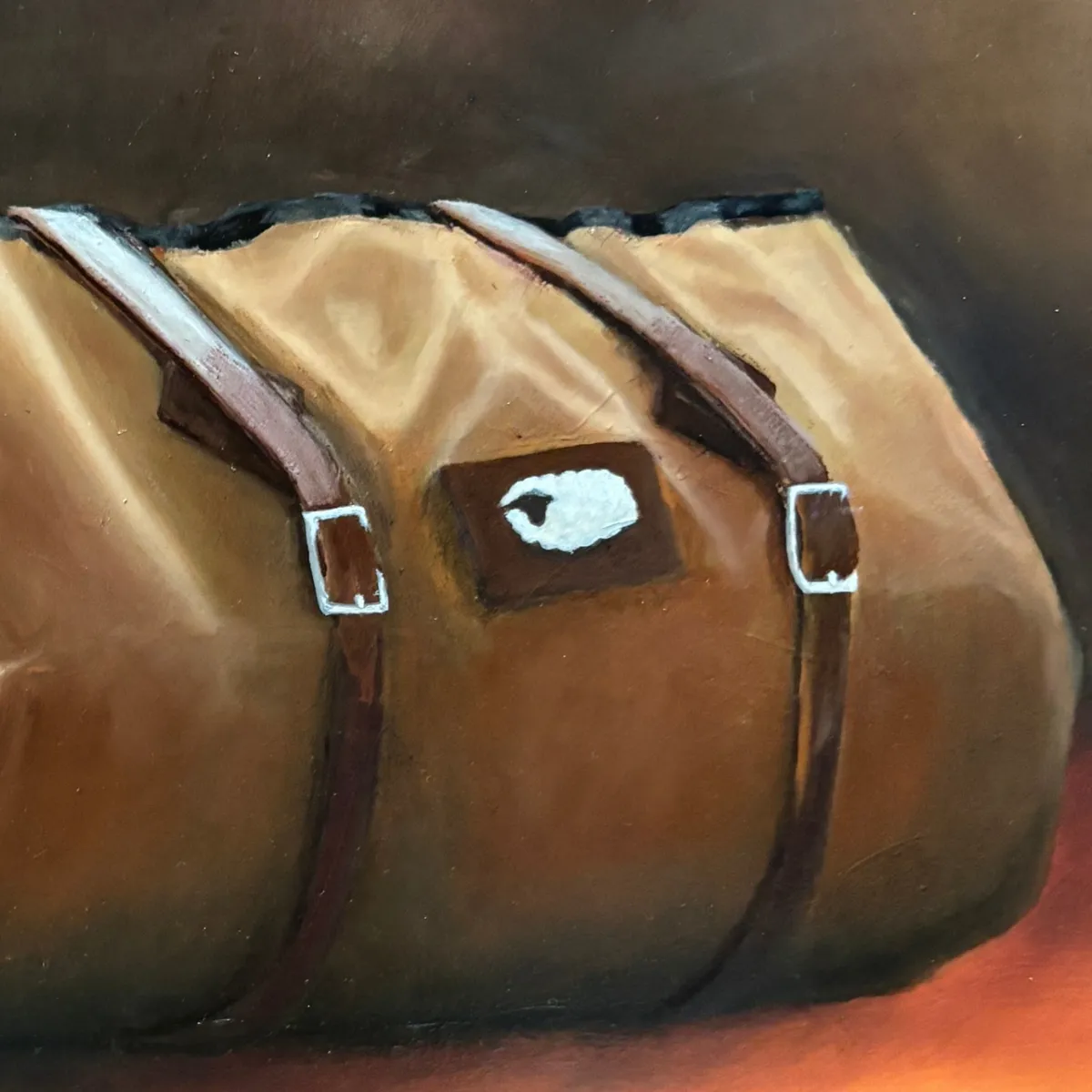
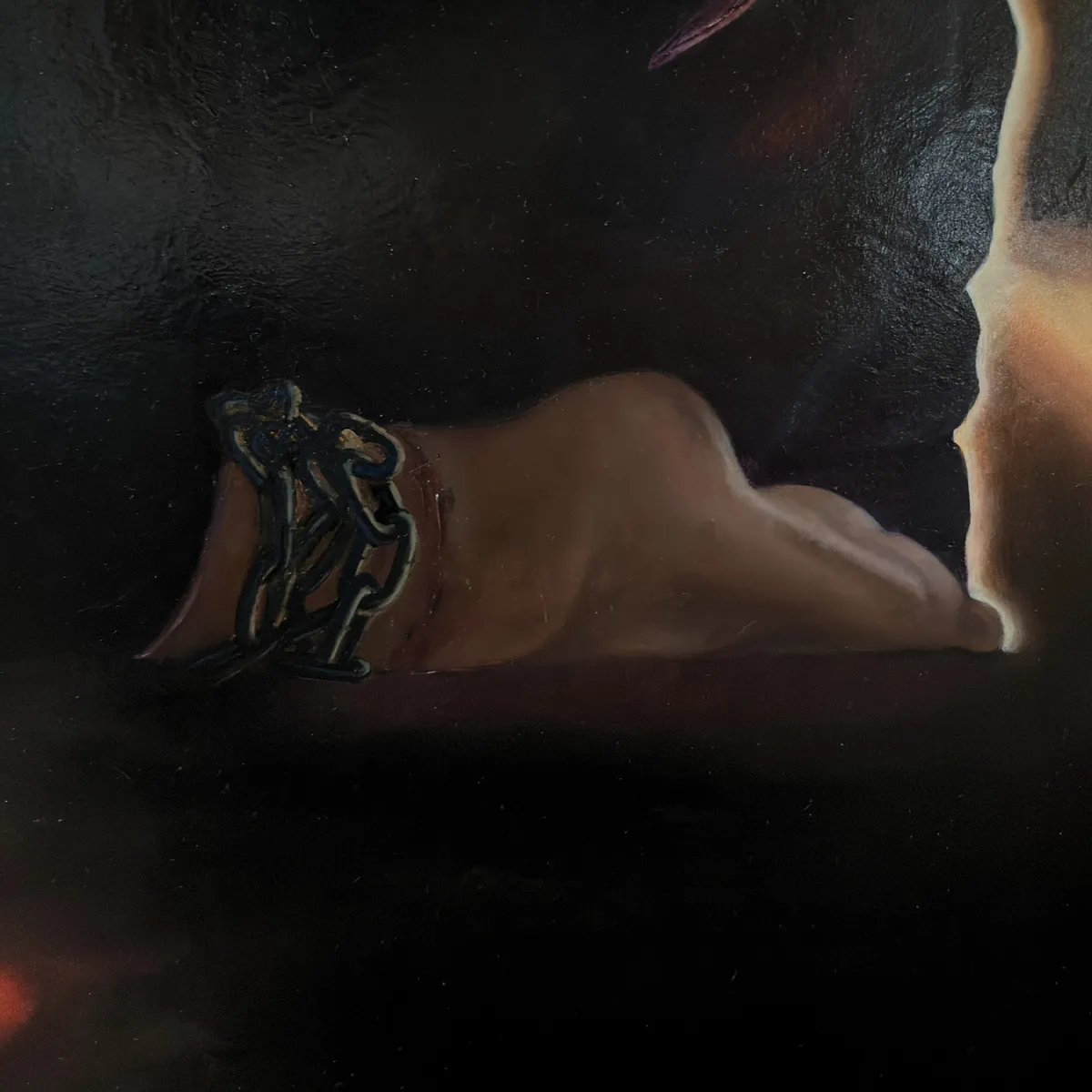
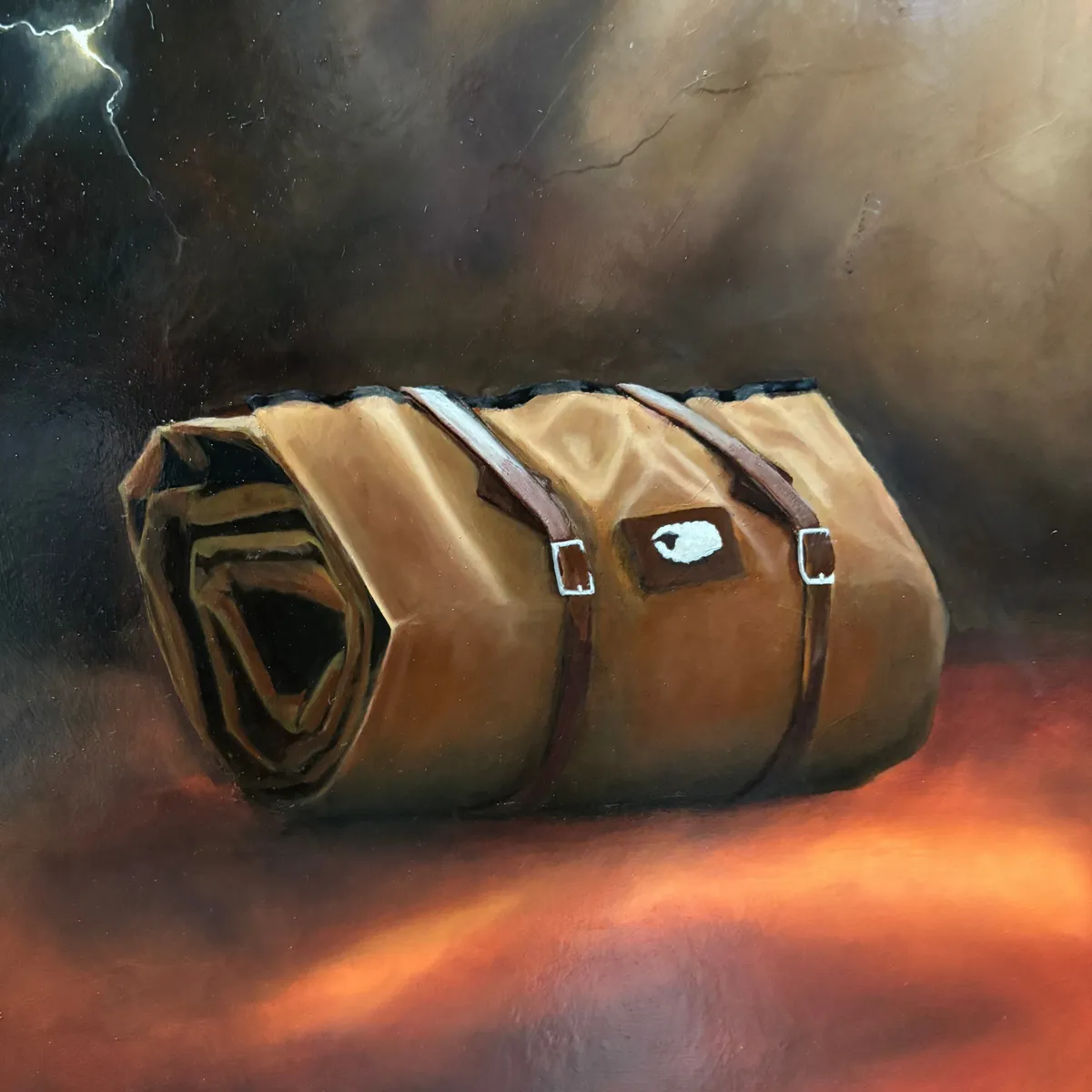
The sheep on the bedroll represents the sheep Jesus sends out among wolves.
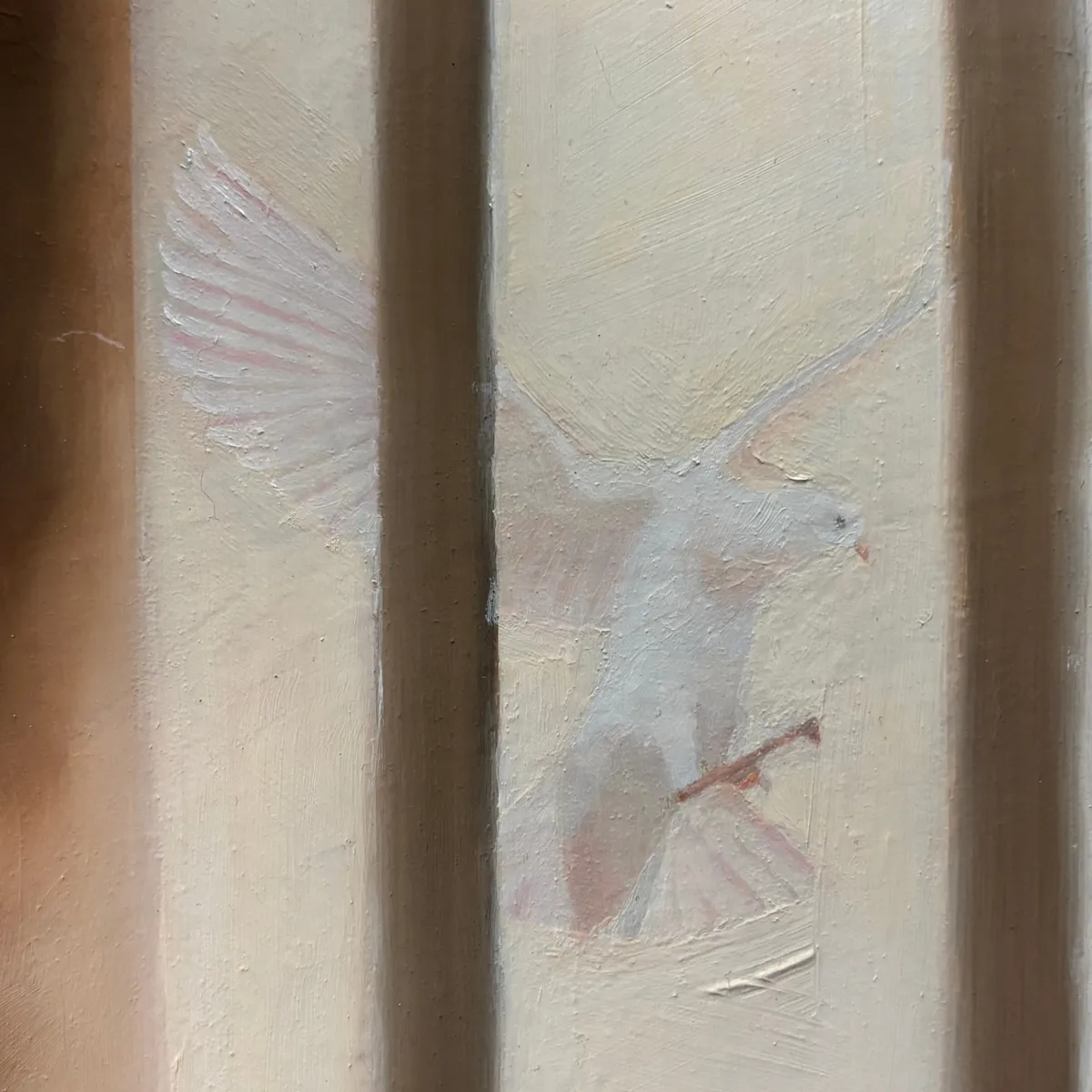
The dove flying through the prison bars represents the innocence Jesus calls His disciples to maintain.
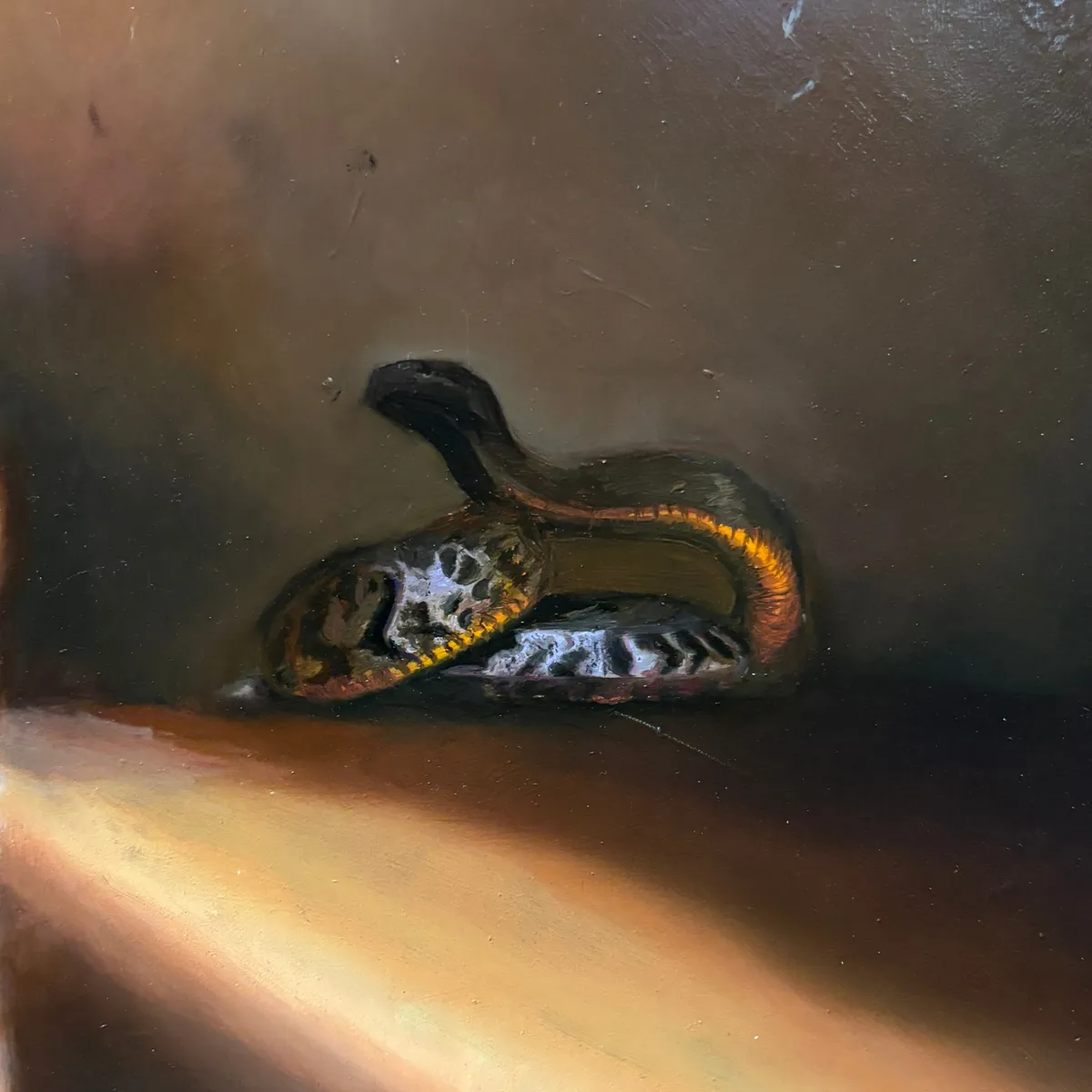
The snake in the dark corner represents the shrewdness Jesus tells His disciples to exercise.
The wolves implied outside the prison walls represent those who oppose the message and the people carrying it.
Together, these details reflect the tension in Jesus' instruction: His disciples are to be wise without abandoning innocence. They must understand the dangers they may face while remaining faithful to the character and message of Christ.
The Kneeling Figure: Suffering, Surrender, and Faithfulness
The kneeling figure carries several meanings drawn from Matthew 10:17-20, 22, 24, 28, 30, and 32.
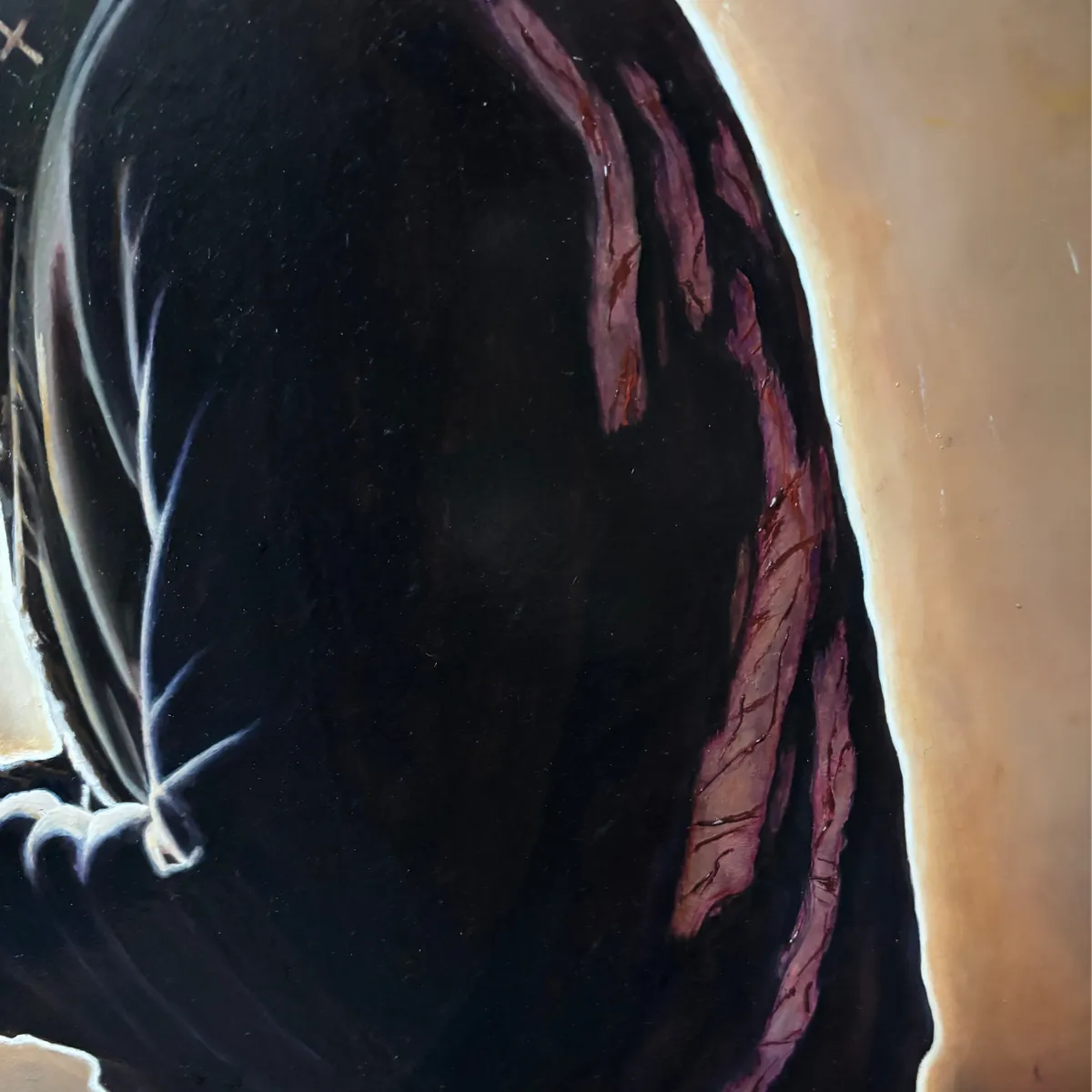
Matthew 10:17 - The stripes on his back
17Beware of men, for they will deliver you over to courts and flog you in their synagogues,
The flogging stripes represent the persecution Jesus warns His disciples they may face. Following Christ can bring suffering because of their faithfulness to Him. Each of the stripes are raised like ridges by a thicker application of the paint. This was purposefully done to draw the eyes to the stripes and emphasis the suffering.
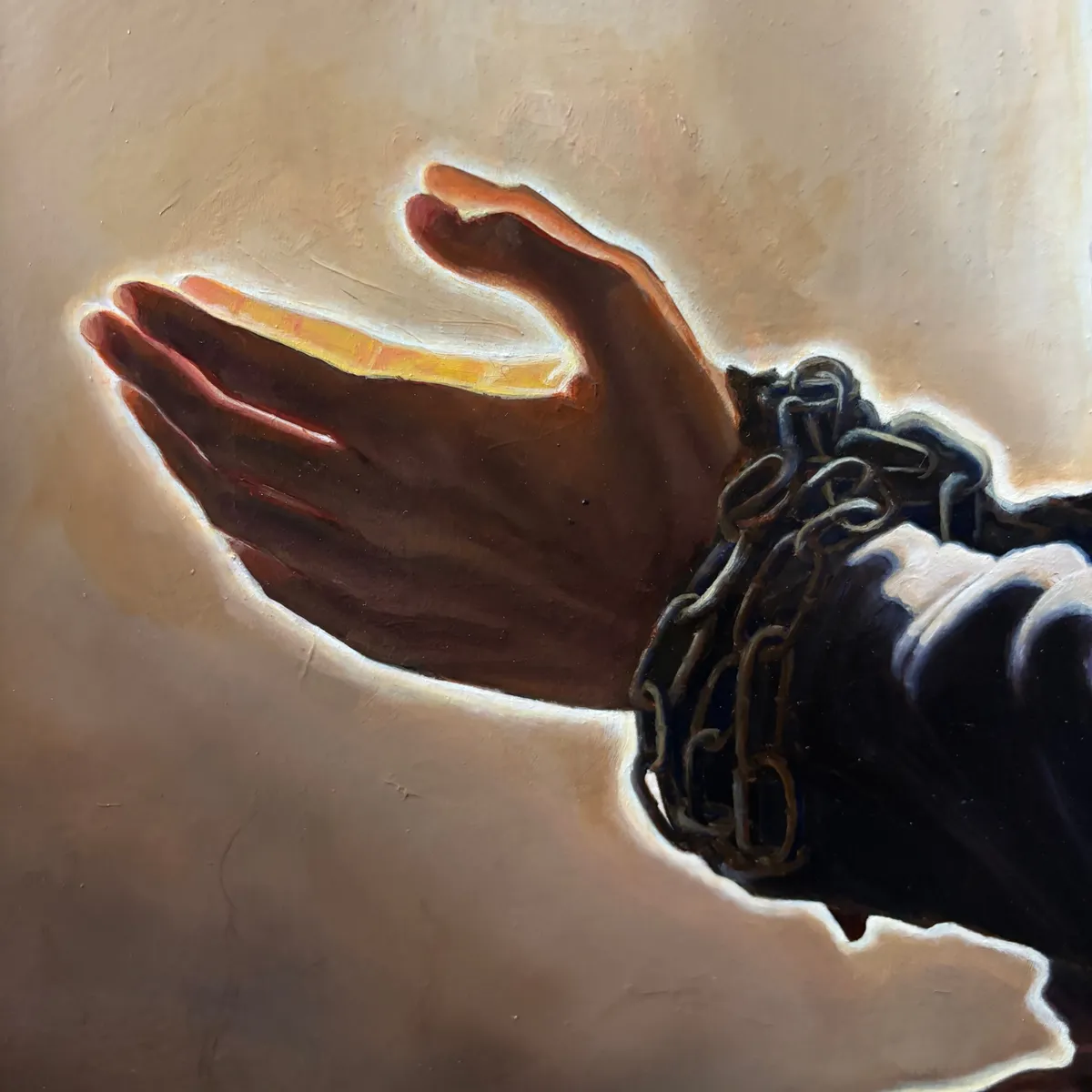
Matthew 10:18-20 - The chains on his wrists and ankles
18rand you will be dragged before governors and kings for my sake, to bear witness before them and the Gentiles. 19rWhen they deliver you over, do not be anxious how you are to speak or what you are to say, for what you are to say will be given to you in that hour. 20xFor it is not you who speak, but the Spirit of your Father speaking through you.
The chains represent imprisonment and the possibility of being brought before authorities because of following Jesus. His hands are open, ready to receive the Lord's wisdom.
This detail also connects to Colossians 4:18, where Paul asks the believers to remember his chains. The chains were originally going to be rope, but as Sheri and Briauna studied Paul's words, they decided chains better reflected the Scripture.
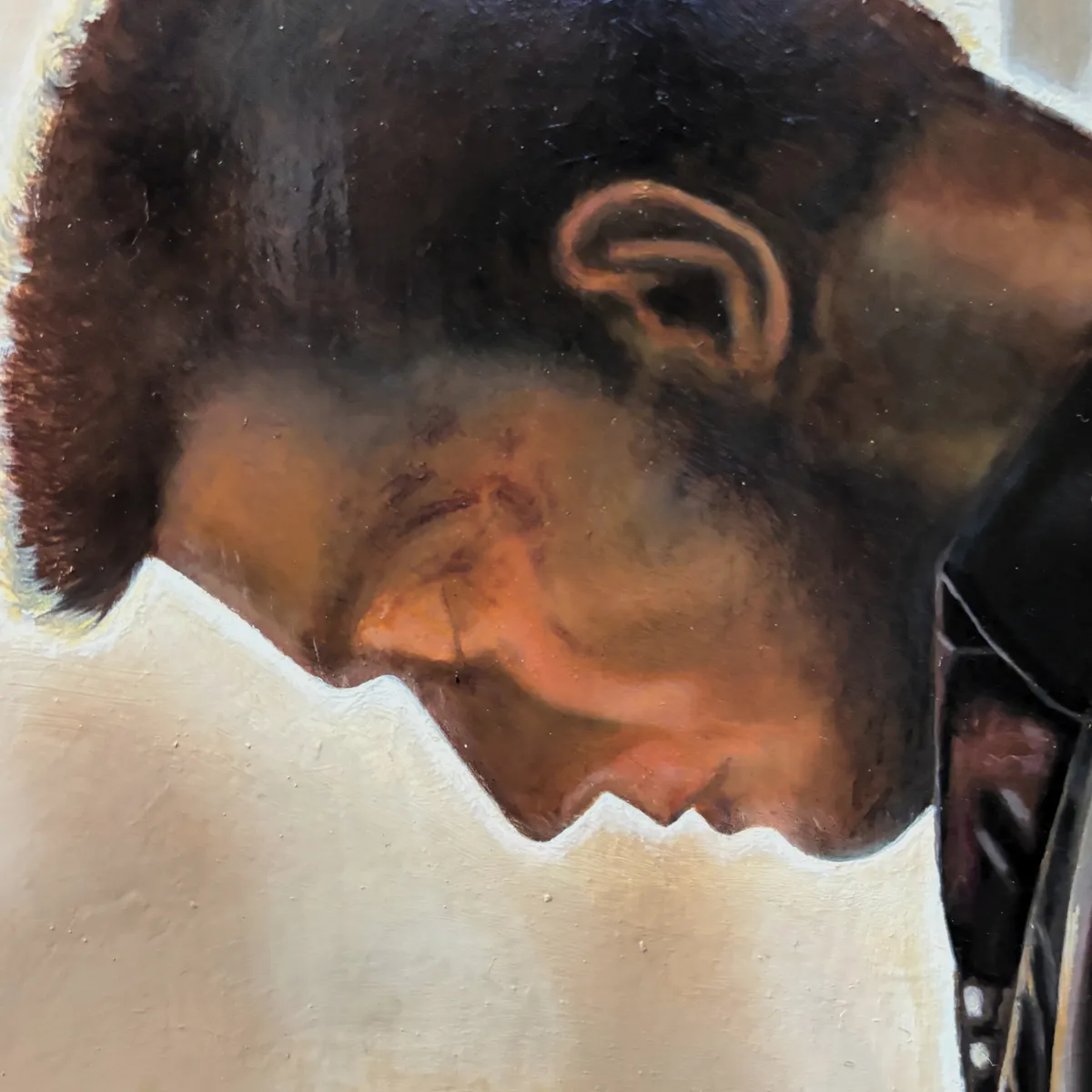
His face represents the hatred Christians may encounter because they follow Jesus. Yet despite his injuries, his expression is peaceful. He understands that God is in control of his fate.
The contrast matters: suffering is real, but it does not have to mean that faith has been lost.
Matthew 10:24-25 - His bowed head, the bruises and wounds
Jesus reminds His disciples that a student is not above the teacher, nor a servant above the master. The man's bowed head represents respect and humility. He is not above his Teacher, Jesus.
Just as Jesus suffered, we too are promised suffering -
John 16:33(ESV): In this life you will have many trials and sorrows.
Paul speaks of suffering in the epistles:
Romans 6:5 (ESV): “For if we have been united with him in a death like his, we shall certainly be united with him in a resurrection like his.”
Philippians 3:10-11 (ESV): “I want to know Christ—yes, to know the power of his resurrection and participation in his sufferings, becoming like him in his death, and so, somehow, attaining to the resurrection from the dead.”
Romans 8:17 (ESV): “and if children, then heirs—heirs of God and fellow heirs with Christ, provided we suffer with him in order that we may also be glorified with him.”
Jesus teaches that those who can kill the body cannot kill the soul. The glow surrounding the entire figure represents the soul that cannot be killed by those who persecute the body.
Matthew 10:30 - God's intimate knowledge of His people
30But meven the hairs of your head are all numbered.
Jesus reminds His disciples that even the hairs of their heads are numbered. This verse reinforces the reminder that the man is fully known by God, even in the midst of suffering and uncertainty.
Matthew 10:32 - Acknowledging Christ
32oSo everyone who acknowledges me before men, I also will acknowledge before my Father who is in heaven,
The man's posture also connects to Jesus' words about acknowledging Him before others. Faithfulness to Christ is not meant to be hidden simply because acknowledging Him may carry a cost.
The Dagger: Betrayal and Division
Matthew 10:21, 28, and 34-36
21zBrother will deliver brother over to death, and the father his child, and children will rise against parents and have them put to death,
28And kdo not fear those who kill the body but cannot kill the soul. Rather fear him lwho can destroy both soul and body in hell.8
34r“Do not think that I have come to bring peace to the earth. sI have not come to bring peace, but a sword. 35rFor I have come tto set a man against his father, and a daughter against her mother, and a daughter-in-law against her mother-in-law. 36uAnd a person’s enemies will be those of his own household.
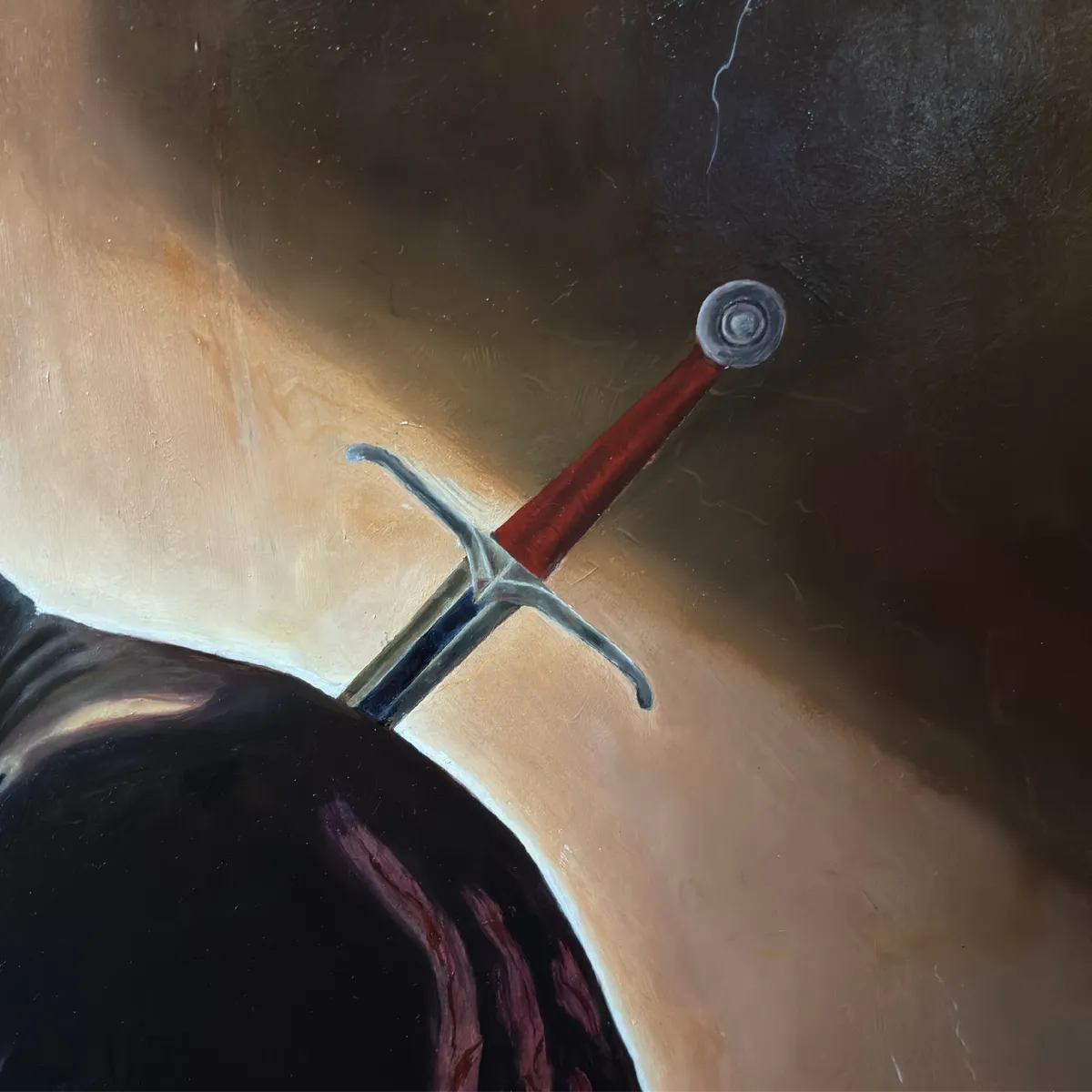
The dagger connects to Matthew 10:21, 28, and 34-36.
It is positioned in the man's back to represent betrayal, and its angle points directly toward the heart.
Jesus warns that following Him may bring division even within families. The dagger makes that painful possibility visible. Betrayal can come from people close to us, and the cost of remaining faithful to Christ may be deeply personal.
The dagger is not a call to hostility or violence. It represents the pain and division Jesus warns His disciples they may experience.
The Bedroll: A Life Ready to Go
The bedroll represents Matthew 10:23 and the possibility of becoming a nomad while following Christ. Jesus speaks of moving from one place to another when persecuted.
The bedroll represents a life prepared to move rather than remain permanently comfortable in one place. Following Christ may require leaving what is familiar and continuing forward without knowing exactly where the road will lead.
For the Tiebens, this imagery connects directly to the reality of preparing for missionary service in Guinea. For others, it invites reflection on whether they are willing to let God redirect their plans.
The Upside-Down Cross: Misrepresentation and Opposition
Luke 11:14-20
14yNow he was casting out a demon that was mute. When the demon had gone out, the mute man spoke, and the people marveled. 15But some of them said, “He casts out demons zby Beelzebul, the prince of demons,” 16while others, ato test him, kept seeking from him a sign from heaven. 17bBut he, cknowing their thoughts, said to them, “Every kingdom divided against itself is laid waste, and a divided household falls. 18And if Satan also is divided against himself, how will his kingdom stand? For you say that I cast out demons by Beelzebul. 19And if I cast out demons by Beelzebul, dby whom do eyour sons cast them out? Therefore they will be your judges. 20But if it is by fthe finger of God that I cast out demons, then gthe kingdom of God has come upon you.
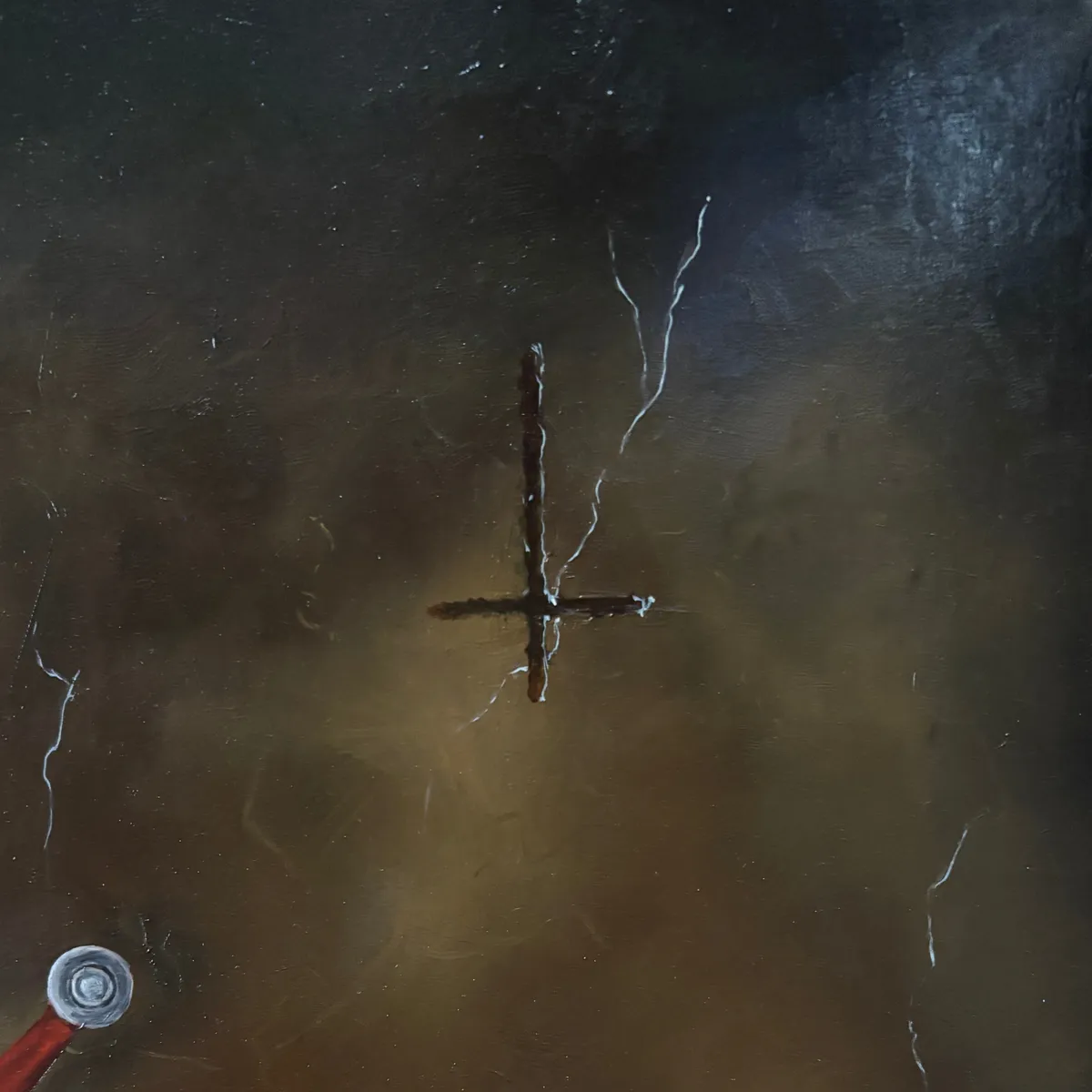
The upside-down cross connects to Matthew 10:25 and Luke 11:14-20.
Matthew 10:25 describes the opposition Jesus faced and warns His disciples that they may also be maligned. In Luke 11:14-20, Jesus faces accusations about the source of His power and responds to those accusations.
The upside-down cross represents the way the work of Christ can be misrepresented by those who oppose Him. It reflects the accusation and distortion that may accompany faithfulness to Jesus.
This detail reminds us that following Christ does not guarantee that others will understand our motives or interpret our actions fairly.
The Light and Darkness: Nothing Hidden
The light and darkness connect to Matthew 10:26-27 and represent the presence of the Lord.
Jesus tells His disciples not to fear those who oppose them. What is concealed will be revealed, and what He has taught them privately must be proclaimed openly.
The light cutting through the darkness points toward that call to bring the message of Christ into the open. It also reflects the Lord's presence amid the uncertainty and suffering surrounding the figure.
The darkness does not mean the Lord is absent. Even in a difficult place, His presence remains part of the story.
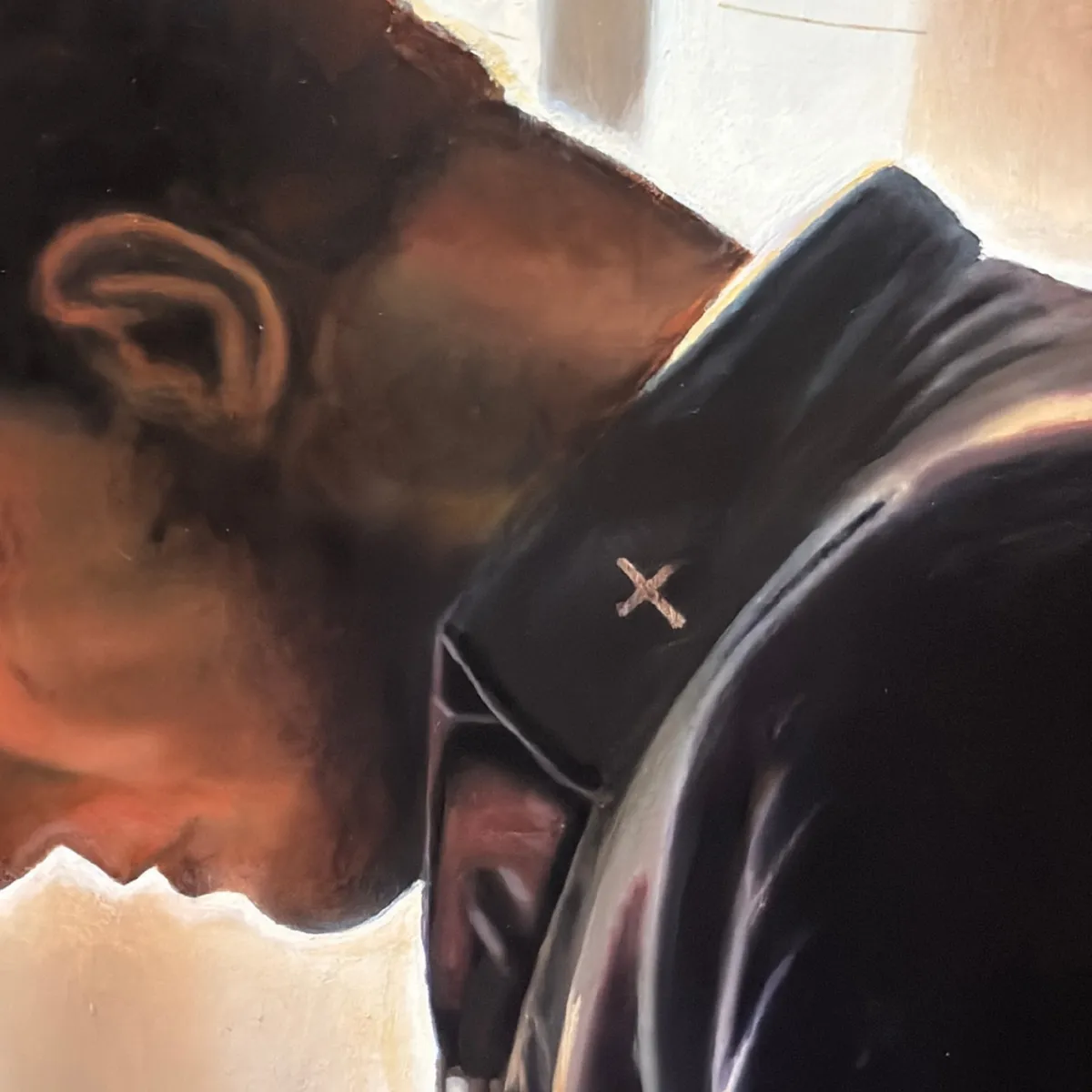
The Cross on His Collar: Whom Do We Acknowledge?
Matthew 10:32-33, 37-39
32oSo everyone who acknowledges me before men, I also will acknowledge before my Father who is in heaven, 33but pwhoever denies me before men, qI also will deny before my Father who is in heaven.
37vWhoever loves father or mother more than me is not worthy of me, and whoever loves son or daughter more than me is not worthy of me. 38And wwhoever does not take his cross and xfollow me is not worthy of me. 39yWhoever finds his life will lose it, and whoever loses his life for my sake will find it.
The cross is not depicted as a separate object in the painting. It is worn on the collar of the man's clothing.
This small detail connects to Matthew 10:32-33 and 37-39. Jesus calls His disciples to acknowledge Him before others, to love Him above even their closest family relationships, and to take up their cross and follow Him.
The cross on the collar represents the man's allegiance to Christ. His identity as a follower of Jesus is not separate from the suffering and sacrifice depicted throughout the painting.
The question it raises is a personal one: when following Jesus comes at a cost, will we continue to acknowledge Him?
The Bare Feet: Carrying the Good News
Romans 10:15
15And how are they to preach unless they are sent? As it is written, w“How beautiful are the feet of those who preach the good news!”
The man's bare feet connect to Isaiah 52:7 and Romans 10:15, passages that speak of the feet of those who bring good news.
Originally, the man's feet were covered. But when Heath remembered these passages, it was decided that bare feet would better reflect the Scripture.
The feet draw attention to the person who carries the message. The call to share the Gospel is not only about what we believe privately; it is also about going and bringing that good news to others.
This detail connects the suffering figure in Matthew 10 with the wider mission of proclaiming Christ.
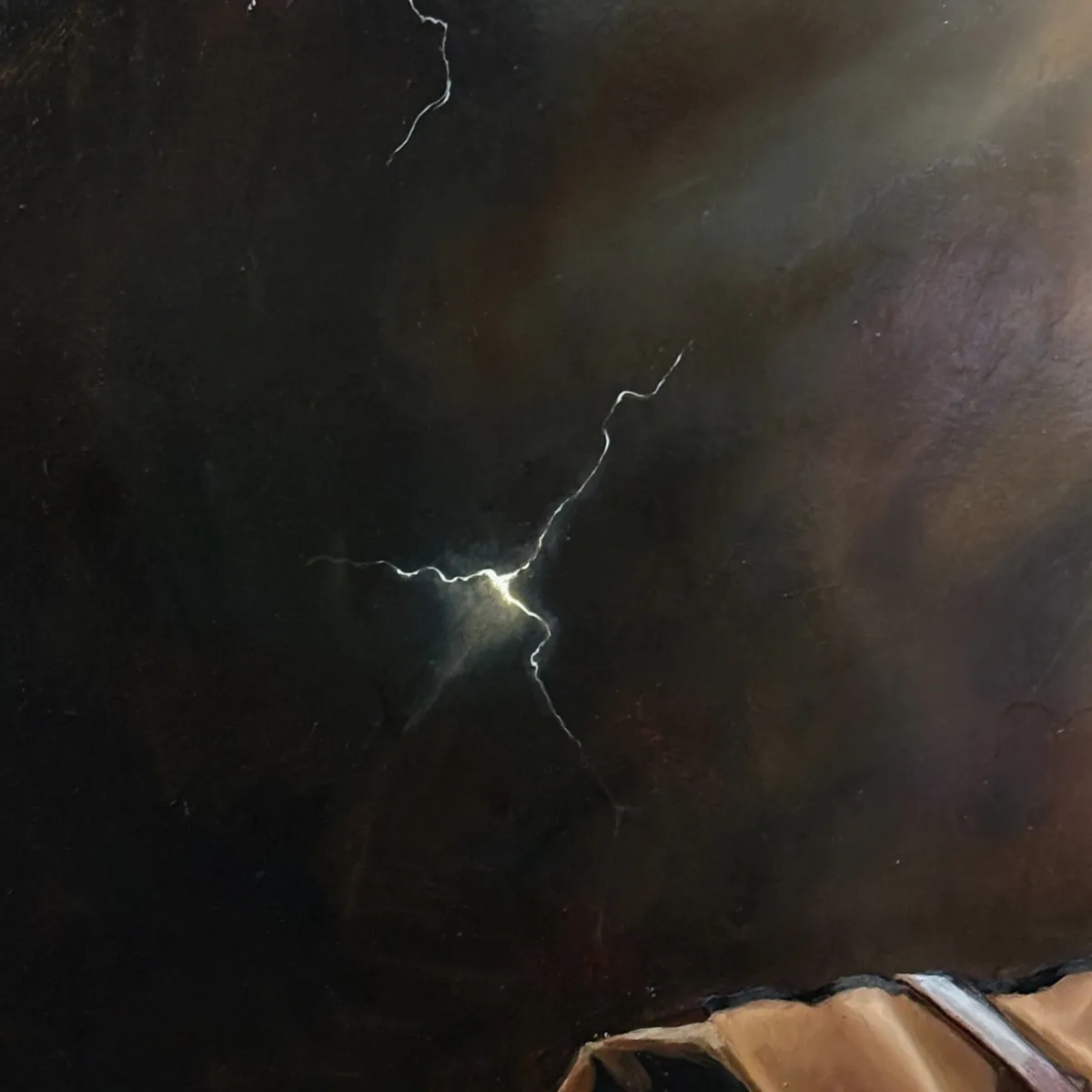
The Crack in the Wall: A Small Opening
The crack in the wall was specifically requested by the Tiebens because it represents how their journey began.
It was a small crack that showed them a way forward: not a complete view of the road ahead, but an opening through which they could begin to see what might be possible.
The crack also represents how sharing our testimonies can help bring change to a community. When we share how Jesus has saved us and tell others about His good works in the world, those stories can become a small opening through which people begin to see what God can do.
We do not always know how a testimony will affect someone else. We may only see a small beginning. But that opening can matter.
The crack is a reminder that sharing what Jesus has done is part of how His truth reaches others, one story and one person at a time.
The Cost of Creating Disciples
Painted by Briauna Hayden
Commissioned by Heath and Sheri Tieben
Oil on wood panel · 30 × 40 inches
September 2025 – March 2026
Count the Cost.
Trust the Shepherd.
Make Disciples.
SCRIPTURE & ARTWORK EXPOSITION
The Meaning Behind
The Imagery
An in-depth, reflective exploration of how individual verses from Matthew 10:16-39 shaped every brushstroke and symbol in the painting by representing the cost of following Jesus, the call to make disciples, and the faith required to obey.
The Foundation: Matthew 10:16-39
Matthew 10:16-39 is the central passage behind this painting. Jesus prepares His disciples for the realities of following Him.
He speaks about being sent into a hostile world, facing persecution, experiencing betrayal, being misunderstood, and remaining faithful when obedience becomes costly.
He also reminds His disciples not to be afraid. Their lives are known to the Father, and their faithfulness must be grounded in their relationship with Him.
The passage does not present discipleship as an easy road. It presents a call to follow Jesus with a willingness to face what may come.
This is why the painting contains both suffering and peace, both darkness and light, both the threat of betrayal and the posture of surrender. The figure is not shown because the cost is insignificant. He is shown because the cost must be considered in light of the One he follows.
The details below explore how individual verses shaped the imagery.
The Sheep, Dove, Snake, and Wolves: Wise and Innocent
Matthew 10:16 begins with Jesus' words:
“I am sending you out like sheep among wolves. Therefore be as shrewd as snakes and as innocent as doves.”
Each of these creatures appears in the painting as a visual connection to that verse.
The sheep on the bedroll represents the sheep Jesus sends out among wolves.
The snake in the dark corner represents the shrewdness Jesus tells His disciples to exercise.
The dove flying through the prison bars represents the innocence Jesus calls His disciples to maintain.
The wolves implied outside the prison walls represent those who oppose the message and the people carrying it.
Together, these details reflect the tension in Jesus' instruction: His disciples are to be wise without abandoning innocence. They must understand the dangers they may face while remaining faithful to the character and message of Christ.
The Kneeling Figure: Suffering, Surrender, and Faithfulness
The kneeling figure carries several meanings drawn from Matthew 10:17-20, 22, 24, 28, 30, and 32.
Matthew 10:17
The stripes on his back
17Beware of men, for they will deliver you over to courts and flog you in their synagogues,
The flogging stripes represent the persecution Jesus warns His disciples they may face. Following Christ can bring suffering because of their faithfulness to Him. Each of the stripes are raised like ridges by a thicker application of the paint. This was purposefully done to draw the eyes to the stripes and emphasis the suffering.
Matthew 10:18-20 - The chains on his wrists and ankles
18rand you will be dragged before governors and kings for my sake, to bear witness before them and the Gentiles. 19rWhen they deliver you over, do not be anxious how you are to speak or what you are to say, for what you are to say will be given to you in that hour. 20xFor it is not you who speak, but the Spirit of your Father speaking through you.
The chains represent imprisonment and the possibility of being brought before authorities because of following Jesus. His hands are open, ready to receive the Lord's wisdom.
This detail also connects to Colossians 4:18, where Paul asks the believers to remember his chains. The chains were originally going to be rope, but as Sheri and Briauna studied Paul's words, they decided chains better reflected the Scripture.
His face represents the hatred Christians may encounter because they follow Jesus. Yet despite his injuries, his expression is peaceful. He understands that God is in control of his fate.
The contrast matters: suffering is real, but it does not have to mean that faith has been lost.
Matthew 10:24-25 - His bowed head, the bruises and wounds
Jesus reminds His disciples that a student is not above the teacher, nor a servant above the master. The man's bowed head represents respect and humility. He is not above his Teacher, Jesus.
Just as Jesus suffered, we too are promised suffering -
John 16:33(ESV): In this life you will have many trials and sorrows.
Paul speaks of suffering in the epistles:
Romans 6:5 (ESV): “For if we have been united with him in a death like his, we shall certainly be united with him in a resurrection like his.”
Philippians 3:10-11 (ESV): “I want to know Christ—yes, to know the power of his resurrection and participation in his sufferings, becoming like him in his death, and so, somehow, attaining to the resurrection from the dead.”
Romans 8:17 (ESV): “and if children, then heirs—heirs of God and fellow heirs with Christ, provided we suffer with him in order that we may also be glorified with him.”
Jesus teaches that those who can kill the body cannot kill the soul. The glow surrounding the entire figure represents the soul that cannot be killed by those who persecute the body.
Matthew 10:30 - God's intimate knowledge of His people
30But meven the hairs of your head are all numbered.
Jesus reminds His disciples that even the hairs of their heads are numbered. This verse reinforces the reminder that the man is fully known by God, even in the midst of suffering and uncertainty.
Matthew 10:32 - Acknowledging Christ
32oSo everyone who acknowledges me before men, I also will acknowledge before my Father who is in heaven,
The man's posture also connects to Jesus' words about acknowledging Him before others. Faithfulness to Christ is not meant to be hidden simply because acknowledging Him may carry a cost.
The Dagger: Betrayal and Division
Matthew 10:21, 28, and 34-36
21zBrother will deliver brother over to death, and the father his child, and children will rise against parents and have them put to death,
28And kdo not fear those who kill the body but cannot kill the soul. Rather fear him lwho can destroy both soul and body in hell.8
34r“Do not think that I have come to bring peace to the earth. sI have not come to bring peace, but a sword. 35rFor I have come tto set a man against his father, and a daughter against her mother, and a daughter-in-law against her mother-in-law. 36uAnd a person’s enemies will be those of his own household.
The dagger connects to Matthew 10:21, 28, and 34-36.
It is positioned in the man's back to represent betrayal, and its angle points directly toward the heart.
Jesus warns that following Him may bring division even within families. The dagger makes that painful possibility visible. Betrayal can come from people close to us, and the cost of remaining faithful to Christ may be deeply personal.
The dagger is not a call to hostility or violence. It represents the pain and division Jesus warns His disciples they may experience.
The Bedroll: A Life Ready to Go
The bedroll represents Matthew 10:23 and the possibility of becoming a nomad while following Christ. Jesus speaks of moving from one place to another when persecuted.
The bedroll represents a life prepared to move rather than remain permanently comfortable in one place. Following Christ may require leaving what is familiar and continuing forward without knowing exactly where the road will lead.
For the Tiebens, this imagery connects directly to the reality of preparing for missionary service in Guinea. For others, it invites reflection on whether they are willing to let God redirect their plans.
The Upside-Down Cross: Misrepresentation and Opposition
Luke 11: 14-20
14yNow he was casting out a demon that was mute. When the demon had gone out, the mute man spoke, and the people marveled. 15But some of them said, “He casts out demons zby Beelzebul, the prince of demons,” 16while others, ato test him, kept seeking from him a sign from heaven. 17bBut he, cknowing their thoughts, said to them, “Every kingdom divided against itself is laid waste, and a divided household falls. 18And if Satan also is divided against himself, how will his kingdom stand? For you say that I cast out demons by Beelzebul. 19And if I cast out demons by Beelzebul, dby whom do eyour sons cast them out? Therefore they will be your judges. 20But if it is by fthe finger of God that I cast out demons, then gthe kingdom of God has come upon you.
The upside-down cross connects to Matthew 10:25 and Luke 11:14-20.
Matthew 10:25 describes the opposition Jesus faced and warns His disciples that they may also be maligned. In Luke 11:14-20, Jesus faces accusations about the source of His power and responds to those accusations.
The upside-down cross represents the way the work of Christ can be misrepresented by those who oppose Him. It reflects the accusation and distortion that may accompany faithfulness to Jesus.
This detail reminds us that following Christ does not guarantee that others will understand our motives or interpret our actions fairly.
The Light and Darkness: Nothing Hidden
The light and darkness connect to Matthew 10:26-27 and represent the presence of the Lord.
Jesus tells His disciples not to fear those who oppose them. What is concealed will be revealed, and what He has taught them privately must be proclaimed openly.
The light cutting through the darkness points toward that call to bring the message of Christ into the open. It also reflects the Lord's presence amid the uncertainty and suffering surrounding the figure.
The darkness does not mean the Lord is absent. Even in a difficult place, His presence remains part of the story.
The Cross on His Collar: Whom Do We Acknowledge?
Matthew 10:32-33, 37-39
32oSo everyone who acknowledges me before men, I also will acknowledge before my Father who is in heaven, 33but pwhoever denies me before men, qI also will deny before my Father who is in heaven.
37vWhoever loves father or mother more than me is not worthy of me, and whoever loves son or daughter more than me is not worthy of me. 38And wwhoever does not take his cross and xfollow me is not worthy of me. 39yWhoever finds his life will lose it, and whoever loses his life for my sake will find it.
The cross is not depicted as a separate object in the painting. It is worn on the collar of the man's clothing.
This small detail connects to Matthew 10:32-33 and 37-39. Jesus calls His disciples to acknowledge Him before others, to love Him above even their closest family relationships, and to take up their cross and follow Him.
The cross on the collar represents the man's allegiance to Christ. His identity as a follower of Jesus is not separate from the suffering and sacrifice depicted throughout the painting.
The question it raises is a personal one: when following Jesus comes at a cost, will we continue to acknowledge Him?
The Bare Feet: Carrying the Good News
Romans 10:15
15And how are they to preach unless they are sent? As it is written, w“How beautiful are the feet of those who preach the good news!”
The man's bare feet connect to Isaiah 52:7 and Romans 10:15, passages that speak of the feet of those who bring good news.
Originally, the man's feet were covered. But when Heath remembered these passages, it was decided that bare feet would better reflect the Scripture.
The feet draw attention to the person who carries the message. The call to share the Gospel is not only about what we believe privately; it is also about going and bringing that good news to others.
This detail connects the suffering figure in Matthew 10 with the wider mission of proclaiming Christ.
The Crack in the Wall: A Small Opening
The crack in the wall was specifically requested by the Tiebens because it represents how their journey began.
It was a small crack that showed them a way forward: not a complete view of the road ahead, but an opening through which they could begin to see what might be possible.
The crack also represents how sharing our testimonies can help bring change to a community. When we share how Jesus has saved us and tell others about His good works in the world, those stories can become a small opening through which people begin to see what God can do.
We do not always know how a testimony will affect someone else. We may only see a small beginning. But that opening can matter.
The crack is a reminder that sharing what Jesus has done is part of how His truth reaches others, one story and one person at a time.
Join Our Monthly Support Team
Our current need is a team of recurring monthly financial partners who will help send us to France for language school and sustain our long-term ministry in Guinea.
How to Support Monthly
$50 - $100 - $250
After clicking "Become A Monthly Partner"
Click "Donate Monthly" on our Hope Ignited page (make sure it is highlighted orange)
Choose your preferred donation amount in orange
Click Next
Fill out your information & create a donation login account to manage your donation account
MATTHEW 28:18-20
Then Jesus came to them and said, “All authority in heaven and on earth has been given to me. Therefore go and make disciples of all nations, baptizing them in the name of the Father and of the Son and of the Holy Spirit, and teaching them to obey everything I have commanded you. And surely I am with you always, to the very end of the age.”

The Tiebens
Site Donated By Hayden Digital Group

Start Your Rental Potential Today
Maximize your rental income with expert vacation property management—simple, effective, and stress-free.